
Have you realized that smartphone customers are on a buying spree pocketing iPhones, and giving the Android phones a miss? A study initiated by Changewave has pointed out this contrast, challenging the common belief about Android devices over the iPhone.
The study has forecast customers’ potential to buy a smartphone within next 3 months. As many as 46% are planning to go for an iPhone, while 32% will opt for Android. The remaining ones have plans to buy Blackberry and Windows phone devices.
iPhone had been dominating the arena till September 2009 when the powerful and Motorola Droid debuted. The arrival of the Droid gave Android the deserving significance. But iPhone returned to hold the highest demand and maintained the trend with the iPhone 4 that was released a year ago. Current estimates show the demand for the iPhone 4 could drop with the upcoming September launch of the iPhone 5.
By the end of 2010, the number Android and iPhone subscribers were almost equal. But things changed dramatically when Verizon customers got to choose the iPhone over Android. Since then Motorola started losing its dominance. It may be recalled that Moto’s share of buyers dropped by a third to eight percent now.
All the compasses point to Apple’s good in future. Apple’s cloud computing option, iCloud, one of the USP for customers who bought any kind Apple product has come about as a charmer option for Apple fans.
If we look at the smartphone satisfaction statistics, Apple emerges as a winner here too. A 70% of iPhone users are satisfied with their phones, but Android only could satisfy half of their owners. RIM comes quite last in list with just 26%, followed by Windows with 27%.
View the original article here
Based on Deidu, every new version from the iPhone sells roughly twice as numerous units because the final. Having said that, there is also a limit to how several possible customers are on the market, as is usually a limit to how lots of devices is often assembled in good time. Still, GSLO sees Dediu’s bold prediction as great news.
They’re expecting accessory demand from a huge quantity of iPhone users to drive interest in their Volt solar charger, a case that traps on the handset and powers it to extend talk time, too as other functions, through a built-in solar panel plus a 1500 mAh battery.The solar energy firm was not capitalizing the hype of a rumored physical distinction between the black and white versions with the iPhone 4, but rather referred towards the aesthetic match amongst the handset and its accessory.
View the original article here
But now, Best Buy is offering a more affordable solution--and one that gives buyers even more options--by bundling the iPad with a Verizon, AT&T, or Sprint Mi-Fi device for free, so long as you subscribe to a two-year contract with the respective carrier.
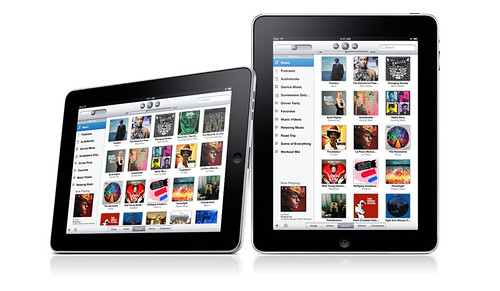
The Mi-Fi hubs offer connectivity for up to 5 different Wi-Fi devices, including the iPad, with the Sprint hub, the Overdrive, exclusively offering 4G connectivity. The deal won’t last long, however, and will end on January 2.
Related Articles:
View the original article here
When I picked up my iPod Touch three months back, I did not know how much I'd fall in love with it. Since then I have used it less for listening to music and more for the various apps that the store has to offer.
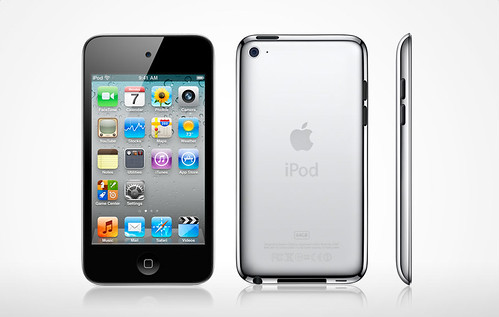
Apple recently revealed the brand new iPod Touch 4th generation. The biggest addition to this are the two cameras that have been added to the iPod Touch, one in the front and one at the back. This brings Facetime to the iPod, which means complete video calling whenever you are connected to a Wi-Fi network.
Another great addition is the retina-display which means you can forget about the granularity you see in the display. So, go ahead and enjoy the movie or gaming experience. And, the camera isn't just there to take photos. You can record high quality HD videos at the touch of a button.
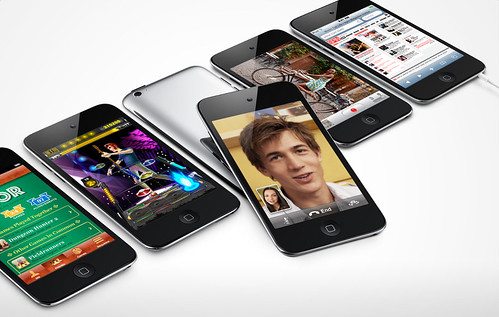
The Apple iPod Touch 4th Generation will be available for $299 (32GB) and $399 (64GB) for the high-end models.
So, will you be picking up one now?
TiVo is set to release its new TiVo Premiere app for the iPad, which will be available as a free download from Apple's iTunes App store in the coming weeks. TiVo recently announced Holiday pricing for the TiVo Premiere box which costs $99.99 with a one-year commitment of $19.99 per month, and the TiVo Premiere XL box which costs $299.99 with a one-year commitment at $19.99 per month.
The video below shows a pretty cool TiVo Premiere App in action. The app enables you to search, browse, select and watch entertainment content, and it also acts as a great remote control and user interface for TiVo Premiere.
By bringing its best in class high-definition user interface to iPad, TiVo has created a true two-screen TV experience. TiVo Premiere users will get access to a full set of TiVo capabilities on iPad, providing a richer TV viewing experience for both live TV and Internet video while kicking back on the sofa. Plus, users will also be able to schedule and manage their DVR recordings while on-the-go.
TiVo Premiere App for iPad features include:
- Gesture based control -- Take complete control of all recordings, even dragging forward and back through a show with a simple tap or swipe
- Start watching what you want -- Launch a recorded show, live TV or streaming video with the swipe of a finger
- Program guide -- Browse your full-screen TV program guide without interrupting TV viewing
- Schedule -- Schedule one-time recordings and Season Pass recordings from the device at home or on-the-go
- Get more from your shows and movies -- Explore cast and crew and other recommendations of your favorite shows without interrupting the big screen
- Search -- Search for all of your favorite TV shows, movies, actors or directors across both broadcast and broadband from Netflix, Amazon Video On Demand, and more
- Share comments with your friends -- From within the TiVo Premiere App, comment and share your thoughts to Facebook or Twitter about the show you are currently watching.
According to the company, the SlingPlayer Mobile app "takes full advantage of the iPad's high-resolution display for amazing video quality." In addition, the application features a program guide optimized for the touch-based iPad interface.
The SlingPlayer iPad app only works with the new Slingbox PRO-HD and Slingbox SOLO units. Older Slingboxes, including the Classic, TUNER, AV and PRO do not have the capability to stream content at a desired resolution, according to the SlingPlayer Mobile Team. To that end, SlingPlayer is offering $50 discount for those upgrading to newer Slingboxes.
In addition, iPhone SlingPlayer Mobile app owners can use their app on the iPad in "compatibility mode" at no extra cost. However, the content will not have the higher iPad-quality resolution.
Related Articles:
View the original article here
Financial services, at 36.8%, dominates the deployments in Good's numbers. The high tech industry lands in second place with 11.4%, followed closely by health care at 10.5%. The legal market at 8.8%, and government at 8.3%, also both consume rather large slices in Good's pie chart.
Industries where the iPad is showing lesser amounts of early use include wholesale/retail, entertainment/media, business professional services, energy/utilities, communications, and manufacturing.
Good Technology, however, is a provider of enterprise mobility applications, and its results are based on activations with its own user base, which consists of 4,000 enterprise customers. Results of Good's survey could be skewed on several scores.
For one thing, Good's statistics don't take into account the use of iPads by SMBs and entrepreneurs. Anecdotally, news reports have been cropping up about the use of iPads by small real estate firms, mom-and-pop stores, and even musical recording artists. Good's study also leaves out industries that aren't commonly regarded as "businesses," such as education, where iPads are also growing strong.
Even if you consider enterprises only, it's quite possible that Good has disproportionate numbers of customers in certain industries, in comparison to others.
With all that said, there's certainly some evidence to support the notion that the three fields pinpointed by Good Technology -- financial services, high tech, and health care – are showing plenty of action in early adoption of the iPad, among businesses of various sizes. Yet this doesn't necessarily mean Apple won't face some obstacles ahead, even in those three arenas.
Financial Services
Unitus Community Credit Union is one relatively small financial services firm now using the iPad. According to a report in Credit Union Times, Unitus' business development manager, Bret Wooden, is visiting potential customers with an iPad in hand. Instead of urging businesses to go into a branch to open up an account, he takes the iPad to their work places and signs them up on the spot.
On the other side of the size spectrum, financial giant JP Morgan this month unveiled an iPad app aimed at giving investment customers instant mobile access to its stock market research and analysis services.
Still, Apple is heading toward more competition in financial services and other business markets from new tablets, particularly with the RIM BlackBerry PlayBook now on the horizon. Reportedly, ManuLife Financial Corp. is already testing the PlayBook. Meanwhile, insurer SunLife has signed on to buy as many as 1,000 PlayBooks. Likewise, the Canadian banking unit of ING Groep NV says it is committed to buying RIM's tablet.
According to Bloomberg, RIM is banking on security features such as the PlayBook's e-mail encryption to win out over Apple among financial services pros.
High Tech
Despite the results of Good's survey, wide-scale deployments of iPads at high tech companies are still hard to locate. Like smartphones before it, though, the iPad is now turning into a ubiquitous device at technology shows -- even at conferences about enterprise databases, CRM (customer relationship management), and other topics not directly related to either Apple or mobile devices.
Computer pros are often among the first to sport the latest and greatest, partly because they're generally keenly interested in technology, anyway. Yet folks such as systems integrators and VARs certainly wouldn't mind making some money off of new devices, either.
Forrester Research has already released a report highlighting three sorts of business opportunities high tech companies might pursue with iPads: "Displace" (where a laptop is used rather than a laptop); "Replace" (where an iPad replaces a clipboard); and "New Place" (where a tablet is used in situations where "nothing" has been used so far).
Yet users in high tech industries can be fickle. Could the iPhone lose favor among high tech customers if it fails to generate enough new business, or if better tablet technology comes along? The iPad does seem very well suited to many purposes, such as delivering sales presentations, taking notes in a classroom, and glancing at medical images, to name a few.
But many in the high tech industry might readily admit that an iPad can't really replace a laptop PC, due to its lack of a hard keyboard and the absence of Adobe Flash. However, the recent release of iOS 4.2 has brought multitasking to the iPad, along with a host of features to aid in enterprise integration, including security measures like remote wipe abilities.
Health Care
Speaking of medical images, the health care field is one area where pilot tests and large deployments of the iPad are particularly visible. iPads are also getting put to use as portable medical workstations for doctors and nurses, and as rehabilitative tools for hospital-bound patients in need of apps such as text-to-speech (TSS).
According to an article in the Chicago Sun Times, Loyola University Medical Center has now given iPads to all of its orthopedic residents as part of a pilot program. Meanwhile, the University of Chicago Medical Center is expanding on an earlier pilot by providing iPads to all of its internal medicine residents.
Many doctors are discovering the iPad to be a convenient way of accessing medical electronic records, because it is lighter than a laptop and it's good on long battery life.
The iPad carries limitations, though, in health care, too. By some accounts, the 1024-by-768 resolution of the iPad screen is adequate for showing CT scans to patients, but not for "primary diagnostic x-ray review."
Moreover, patients might find out that, while some rehabilitative equipment is covered by insurance plans, the iPad is not among them.
Some doctors still tend to the conservative side, and not all of them are tech enthusiasts. In one recent poll conducted by Epocrates, 20 percent of physicians said they planned to buy an iPad. On the other hand, 38% expressed interest, but said they wanted to get more information before making up their minds for sure.
Related Articles:
View the original article here
Subscribe to:
Posts (Atom)


